Showing posts with label Civil War. Show all posts

Tuesday, October 29, 2019

How the North Won: A Military History of the Civil War by Herman Hattaway and Archer Jones


A Scholarly Look at the US Civil War

How the North Won: A Military History of the Civil War by Herman Hattaway and Archer Jones is a scholarly look at the Civil War. Hattaway and Jones have produced a great book on Civil War logistics, planning, and administration.

Logistics and Strategy


The authors seem to focus more on the logistics and strategy side over the tactical side. The book was very good, but at times, it was a dry recitation of chronology, dull facts, and statistics.

I had to force my way to complete the book, and it took two attempts to finish the book. Most copies of the book will collect dust on some university library bookshelf. It is too deep and too dry for most readers. Better to borrow this book from your library than spend your money purchasing the book.

Monday, September 26, 2016

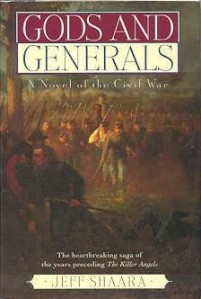
Gods and Generals by Jeff Shaara

gandgbook


Gods and Generals is a 1996 novel which serves as a prequel to his father Michael Shaara's 1974 Pulitzer Prize-winning work about the Battle of Gettysburg, The Killer Angels. The book relates events from 1858 through 1863 during the American Civil War, ending just as the two armies march toward Gettysburg.


Copying his father's approach of focusing on a few of the prominent officers of the two armies, Shaara depicted the emotional drama of soldiers fighting old friends while accurately detailing historical details including troop movements, strategies, and tactical combat situations. General Hancock, for instance, spends much of the novel dreading the day he will have to fire on his friend in the Confederate Army, Lewis "Lo" Armistead. The story also deals with General Lee's disillusionment with the Confederate bureaucracy and General Jackson's religious fervor.


In addition to covering events leading up to the war, the book includes the battles of First Bull Run (mentioned only), Williamsburg, Second Bull Run, Antietam, Fredericksburg, and Chancellorsville.


In 1997, it received the W. Y. Boyd Literary Award for Excellence in Military Fiction from the American Library Association.


A film based on the novel was released in 2003. The film version provides only cursory coverage of immediate pre-war events, focusing primarily on Jackson and the secession of Virginia, and omits the Battle of Antietam (included in the Director's Cut). My recommendation is read the book and skip the film.


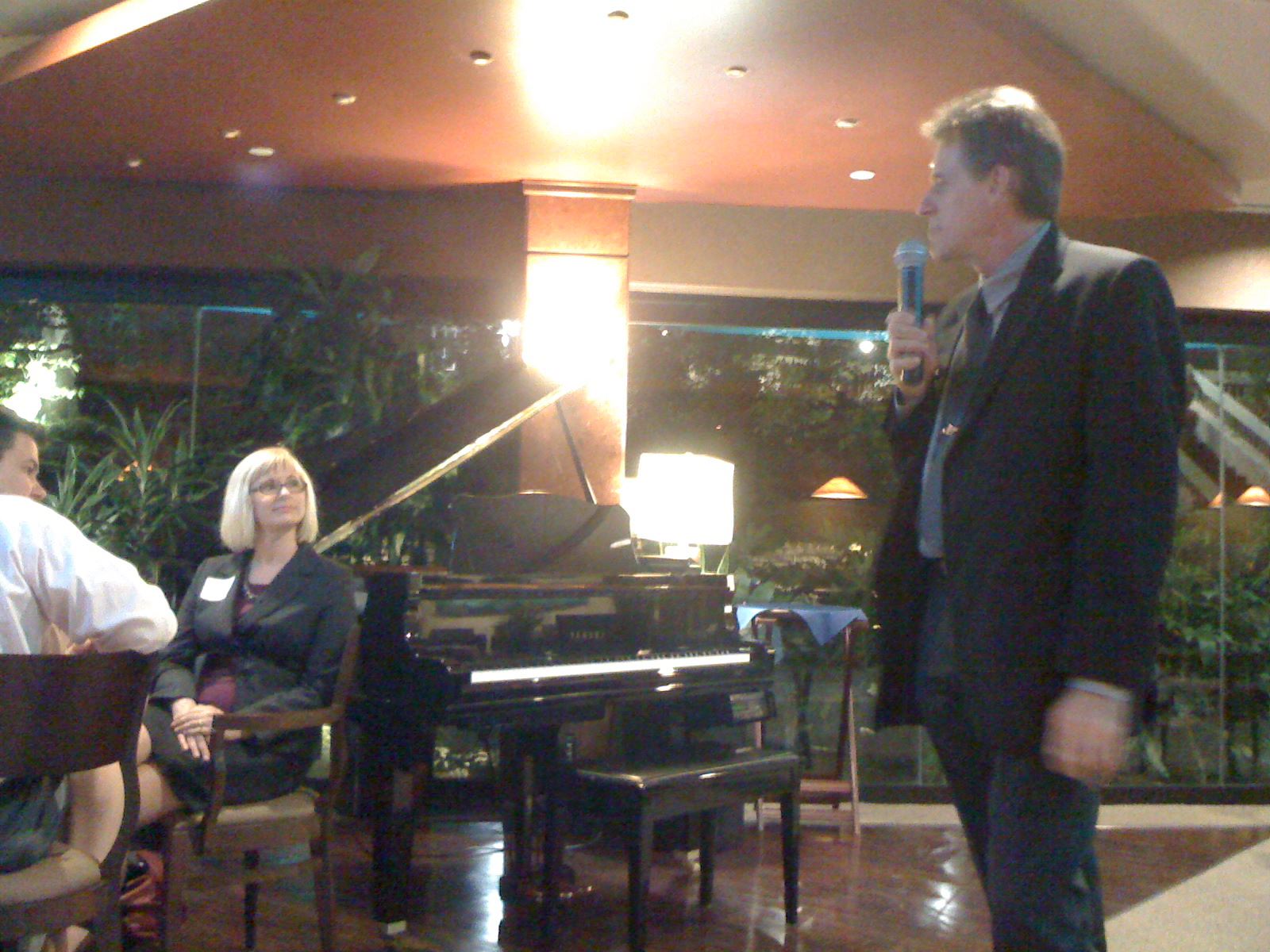
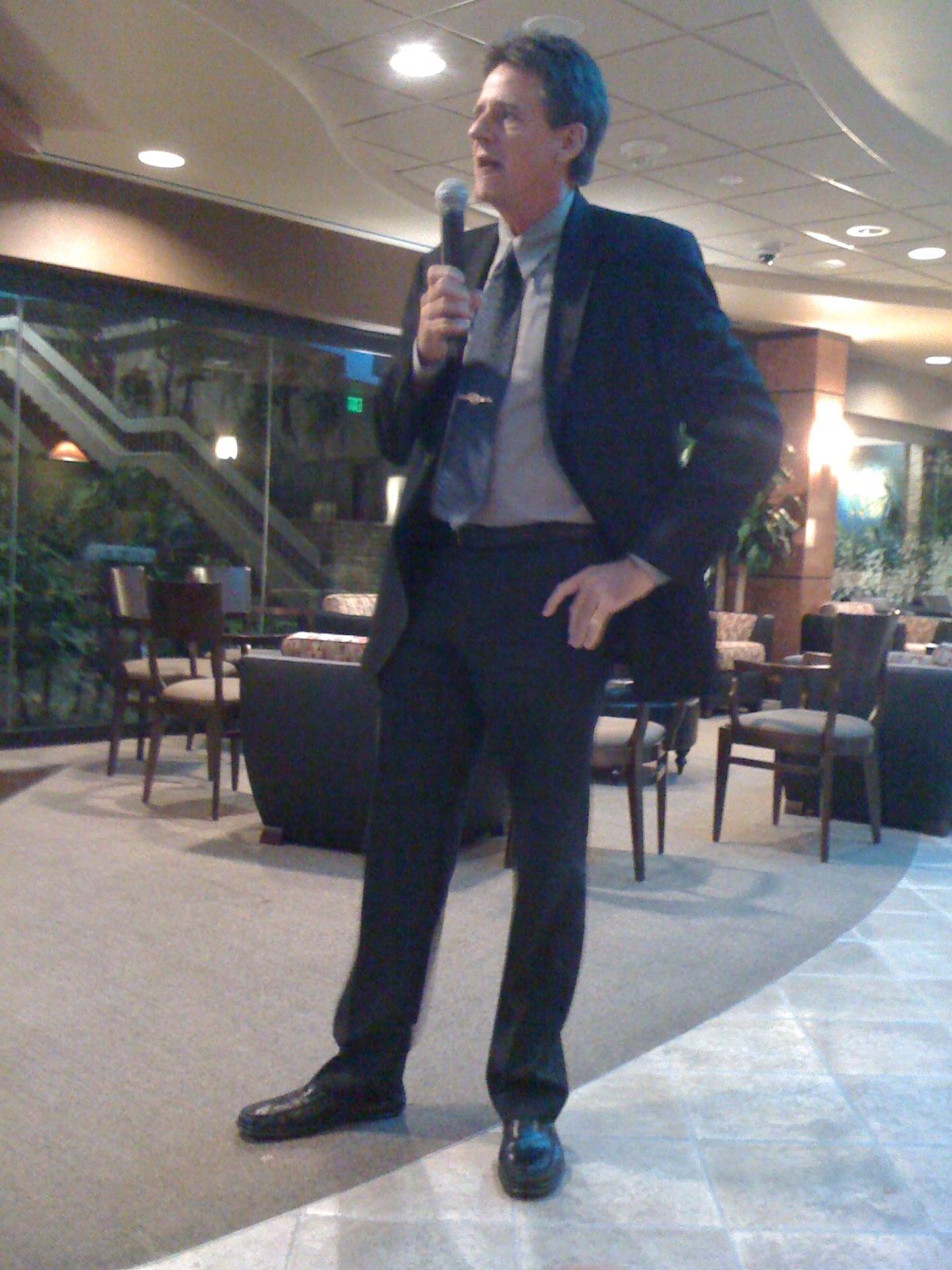
Note: I am a Jeff Shaara fan. He is the author of 14 military historical fiction books. I met him on November 11, 2009, at The University of Texas at Arlington where he was the speaker at their An Evening With the Author Series. I met him in a small group of about a dozen private meet and greet sponsored by the UTA history department.


The below photo is Author Jeff Shaara and Amy J. Schultz, Associate Vice President, Communications and Community Relations, The University of Texas at Arlington.


980217_545255908872334_4276231_o


The last photo is Author Jeff Shaara. What he was explaining his historical research methodology.


1048312_545255378872387_537356674_oPhotos were taken by Jimmie Aaron Kepler on November 11, 2009, at Davis Hall, The University of Texas at Arlington, Arlington, Texas.

Thursday, July 07, 2016

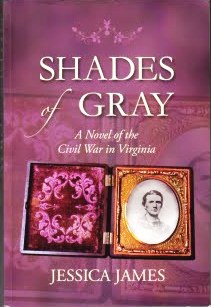
“Shades of Gray: A Novel of the Civil War in Virginia” by Jessica James

68faf-shadesofgray


Let me start with a confession. I am a man. I read Jessica James' “Shades of Gray: A Novel of the Civil War in Virginia”. I found the book interesting and engaging. I liked it!

The story is about Andrea (Sinclair) and Hunter. She is a southerner who works as a Union scout while hiding under a floppy hat impersonating a young man. Hunter is the confederate Cavalry commander. The beginning and end of the book were excellent and deserve five stars.

The middle part of the book slowed down a little for me. A lack of action and repetitiveness had the middle lacking the magic found at the book’s beginning and end. I pressed on in my reading because of all the great reviews and awards “Shades of Gray” had received. I was wondering what I was missing. I am glad I continued reading and finished the book. The last third had me turning the pages and unable to put the book down.

The story line is Andrea is the Union scout with world-class horseman skills that gives Hunter fits. Andrea saves Hunter's life. Their fates become intertwined. She goes to Richmond as a spy posing as a Southern woman. She is captured and reveals her true identity as a Unionist. She spends time in a dreadful prison. Eventually, she ends up near death under house arrest in Hunter’s home as he makes good on a promise (read the book to find out!).

Andrea and Hunter are inflexible to an obsession. Andre has a volatile temper. She and Hunter have a clash of wills and wits. Their attraction for each other builds throughout the novel. They finally admit their feelings, and nothing but difficulties come their way. About this point, the book grabbed me with their fighting and the plot twists where I just read the book straight through to the end.

Jessica James' novel is very good. I am a Civil War buff, holder of a B.A. degree in history, former U.S. Army officer and reader of over a hundred books about the Civil War. That said, the book is up there with the best I've read on the Civil War. I am glad I continued through the middle and finished the book. Even guys will like the book!

“Shades of Gray: A Novel of the Civil War in Virginia” hit number one on Amazon.com in the romance/ historical category, beating “Gone with the Wind”.

Awards and Honors for “Shades of Gray”: 2008 IPPY Award, 2008 Indie Award, 2008 Book Of The Year Finalist (ForeWord Magazine), 2009 Top Five Best Southern Theme (Virginia Romance Writers), and 2008 Favorite Book by The Book Connection and Bookworm's Dinner.

Tuesday, June 30, 2015

Barksdale's Charge: The True High Tide of the Confederacy at Gettysburg, July 2, 1863 by Phillip Thomas Tucker


Phillip Thomas Tucker’s has written a well researched, very readable book titled "Barksdale's Charge: The True High Tide of the Confederacy at Gettysburg, July 2, 1863".

Dr. Tucker’s book makes the premise that at the Battle of Gettysburg General Barksdale's charge is more significant that General Picket’s charge. The author presents detail after detail.

The book gives a wonderful history of the Mississippi Brigade. He points out they are tall, straight shooters, and brave. I found the book redundant at points.

The author makes good arguments for Barksdale’s charge being more important than Pickett’s. If Barksdale had lived and expended the same energy that Pickett did in defending his actions, we think more highly of his Mississippi brigade’s contributions. Interestingly, the point of view presented was almost exclusively southern apologetic.

The book was an enjoyable read. The history of the Mississippi brigade and its contributions is worth the purchase price. I think the historians have already decided Pickett charge was more important than Barksdale’s, but it made me reevaluate.

I am well read on the subject of Gettysburg having read more than twenty books and memoirs on the battle. I am a trained historian by education who studied military history. I am a former US Army infantry officer who has studied the battle in detail in my military science curriculum. All this said; I can examine the premise, but respectfully disagree with it.


jak-moustacheJimmie Aaron Kepler is a novelist, poet, book reviewer, and award-winning short story writer. His work has appeared in over twenty venues, including Bewildering Stories and Beyond Imagination. When not writing each morning at his favorite coffee house, he supports his writing, reading, and book reviewing habit working as an IT application support analyst. He is a former Captain in the US Army. His blog Kepler's Book Reviews was named a 100 best blogs for history buffs in 2010. You can visit him at http://www.jimmiekepler.com.

Monday, May 04, 2015

White Heat: The Friendship of Emily Dickinson and Thomas Wentworth Higginson by Brenda Wineapple

He had seen men enslaved, and seen death in battle on a terrible scale. So when a young, unknown poet named Emily Dickinson wrote to ask whether he thought her verse was “alive”, Thomas Wentworth Higginson – a critic for The Atlantic Monthly and a decorated Union veteran – knew he was seeing poetry that lived and breathed like nothing he had seen before.

Higginson was immediately awed by Emily Dickinson, and went on to become her editor, mentor, and one of the reclusive poet’s closest confidantes. The two met only twice, but exchanged hundreds of deeply personal letters over the next twenty-five years; they commented on each other’s work, mulled over writers they admired, and dazzled each other with nimble turns of phrase. After she died, he shepherded the first collected edition of her poetry into publication, and was a tireless champion of her work in his influential Recent Poems column for The Nation.

Later generations of literary scholars have dismissed Higginson as a dull, ordinary mind, blaming him for the decision to strip some of the distinctive, unusual structure from Dickinson’s poems for publication. However, Brenda Wineapple offers a portrait of Higginson that is far beyond ordinary. He was a widely respected writer, a fervent abolitionist, and a secret accomplice to John Brown’s raid on Harpers Ferry; wounded in the first year of the Civil War, he returned to service as colonel of the first federally-authorized regiment of former slaves. White Heat reveals a rich, remarkable friendship between the citizen soldier and the poet, a correspondence from which Dickinson drew tremendous passion and inspiration – and which she credited, more than once, with saving her life.

Brenda Wineapple is the author and editor of five books, including the award-winning Hawthorne: A Life and Sister Brother: Gertrude and Leo Stein. Her essays, articles, and reviews have appeared in The American Scholar, The New York Times Book Review, Parnassus, Poetry, and The Nation. She teaches in the MFA programs at Columbia University and The New School in New York.

Source: Pritzker Military Library .

Saturday, May 02, 2015

The Civil War: A Narrative, Volume 3: Red River to Appomattox by Shelby Foote

This magnificently written trilogy of books on the American Civil War is not only a piece of first-rate history, but also an excellent work of literature. The late Shelby Foote brings an accomplished novelist's descriptive power to this grand epic. This immense three volume set should be on the bookshelf of any Civil War buff. It is the definitive example of narrative history and creative non-fiction.

I started reading this 2,968-page trilogy on June 6, 2007 and have completed it in September 2008. This is not a reading assignment to tackle in a single season. I read 27 other books while reading through this great work. I will review each book of the trilogy separately. Book One was reviewed the day before yesterday. Book Two was reviewed yesterday. Book Three is reviewed today. 

The Civil War: A Narrative, Volume 3: Red River to Appomattox. Shelby Foote takes the Civil War and scrutinizes it in a writing style that feels as if you are hearing news from the front in an ongoing war. This book is not for the mildly curious, you will get bored and overwhelmed by the dates, names and places. This volume is longer than either of the first two volumes. But to military history, history, or civil war buffs, it is as detailed and factual as you could want. This is truly a definitive work on the War Between the States.

The book handles personalities of both individuals and cultures and their effects on the war. The reading can be slow going at times as armies march toward each other and the order of battle becomes established with the commanders’ names and stations, but the battle details seem incredibly well researched and the accounts of individual soldiers/officers bring home the reality of this conflict.

This book is well worth the effort to read, it imparts a sense of what the United States has survived and clarifies many historical perceptions of the era and the people involved in this massive conflict.

Once more I wish the editor had placed better divisions in the book.

A final thought - I have never read a better, more vivid, more understandable account of the savage battling between Grant's and Lee's armies. Shelby Foote stays with the human discord and distress, and unlike most Southern commentators, he does not take sides. In objectivity, in range, in mastery of detail in beauty of language and feeling for the people involved, this work surpasses anything else on the subject. It stands alongside the work of the best of them. 

Friday, May 01, 2015

The Civil War: A Narrative: Volume 2: Fredericksburg to Meridian by Shelby Foote

This magnificently written trilogy of books on the American Civil War is not only a piece of first-rate history, but also an excellent work of literature. The late Shelby Foote brings an accomplished novelist's descriptive power to this grand epic. This immense three volume set should be on the bookshelf of any Civil War buff. It is the definitive example of narrative history and creative non-fiction.

I started reading this 2,968-page trilogy on June 6, 2007 and have completed it in September 2008. This is not a reading assignment to tackle in a single season. I read 27 other books while reading through this great work. I will review each book of the trilogy separately. Book One was reviewed yesterday. Book Two is reviewed today, Book Three will be reviewed tomorrow.

The Civil War: A Narrative: Volume 2: Fredericksburg to Meridian covers from December 1862 and the Fredericksburg Battle to the Meridian, Mississippi campaign and the US Grant’s promotion to Lieutenant General. The late Shelby Foote continues writing in a down home, comfortable style that is like he is sitting beside you telling a story. Again, I point out as in the review of volume one, make no mistake; he is a southern and tells the story from a southern point of view. The book is a work of creative non-fiction. It is a first class narrative. It is the example of how to write history.

Foote covers all the battles. And he covers what takes place in between the battles though with minor battles tend to be brushed over with the simple reference to their being fought.

As in volume one I admit some parts of the book were a great struggle for me to get through. At times between the battles it was boring. The time from Fredericksburg to Vicksburg and Gettysburg took forever to cover. Foote occasionally repeated himself and would chase rabbits. The time between the campaigns and battles, the endless maneuvers and debates were challenging. Once he moved on to the next battle or fight, the action and pace of the book picked up. Foote shared enough strategy and tactics as well as some of the intellectual processes the key players used to help us understand what leadership on both sides will do under such situations. At times it was like reading the strategy behind a chess game. The back stories of the political considerations were actually enjoyable at times and problematic to boring at others.

I recommend this to any American or person with an interest in American history. Yes, the battles may seem to be repetitious. Yes, the politics and maneuvers do at times get somewhat dry. They must be included to tell the entire story. We need know the story well to know who we are as a people.

Again, I wish the editor had placed better divisions in the book.

Thursday, April 30, 2015

The Civil War: A Narrative, Volume 1: Fort Sumter to Perryville by Shelby Foote


This magnificently written trilogy of books on the American Civil War is not only a piece of first-rate history, but also an excellent work of literature. The late Shelby Foote brings an accomplished novelist's descriptive power to this grand epic. This immense three volume set should be on the bookshelf of any Civil War buff. It is the definitive example of narrative history and creative non-fiction.

I started reading this 2,968-page trilogy on June 6, 2007 and have completed it in September 2008. This is not a reading assignment to tackle in a single season. I read 27 other books while reading through this great work. I will review each book of the trilogy separately. Book One will be reviewed today, Book Two tomorrow, and Book Three the following day.

The Civil War: A Narrative--Fort Sumter to Perryville, Volume One. The book covers the beginning of the war through December 1862. The late Shelby Foote writes with a down home, comfortable style that is like he is sitting beside you telling a story. Make no mistake, he is a southern and tells the story from a southern point of view. The book is a work of creative non-fiction. It is a first class narrative. It is the example of how to write history.

Many students of the Civil War are limited in their knowledge of the war to the major battles of Fort Sumter, Bull Run, Fort Henry and Fort Donelson, Shiloh, Corinth, Iuka, Antietam (Sharpsburg), etc. (battles in 1861 -1862) or the generals. Foote covers all the battles. And he covers what takes place in between the battles though with minor battles tend to be brushed over with the simple reference to their being fought.

I admit some parts of the book were a struggle for me to get through. The time between the campaigns and battles, the endless maneuvers and debates were challenging. Once he moved on to the next battle or fight, the action and pace of the book picked up. Foote shared enough strategy and tactics as well as some of the intellectual processes the key players used to help us understand what leadership on both sides will do under such situations. At times it was like reading the strategy behind a chess game. The back stories of the political considerations were actually enjoyable at times and problematic to boring at others.

I recommend The Civil War: A Narrative--Fort Sumter to Perryville, Volume One to any American or person with an interest in American history. Yes, the battles may seem to be repetitious. Yes, the politics and maneuvers do at times get somewhat dry. They must be included to tell the entire story. We need know the story well to know who we are as a people.

I wish the editor had placed better divisions in the book. Even knowing the history of the civil war well, I had trouble at times with where we were at what battle. Many of the battles are referred to by their southern name, usually the nearest town e.g. Sharpsburg instead of their northern name e.g., Antietam, usually the nearest body of water.

Wednesday, April 29, 2015

The Killer Angels by Michael Sharra


If you have the slightest interest in the Civil War, don't fail to read the late Michael Shaara's book The Killer Angels. It won the Pulitzer Prize for Fiction in 1974. It was number one on the New York Times bestseller list in 1993. For some reason this book had never crossed my path. It wasn't until Father's Day 2008 that I was even aware of its existence. My then 27 year old son gave me a DVD that had both Gods and Generals and Gettysburg on it. In reading the jacket of the DVD I saw the movie was based on this book. After watching the movie, I headed off to the library. I was not disappointed.

This volume shows both the courage and determination of the Union and Confederate soldiers. It examines the story from both viewpoints. You are told the story through the key leadership of the battle. You will read about Robert E. Lee. You will learn what his decisions were based on. You will see why he was so beloved by his army. The book allows you to be present as Lee struggles with decision after decision from his headquarters. 

You can feel the frustration of Longstreet as he tries to convince Lee that defense is a better choice. You will get a picture of the flamboyant Pickett. You will feel Lee's and Longstreet's frustration with J.E.B. Stuart. 

I met a new hero in the book - Joshua Lawrence Chamberlin as I read about the 20th Maine Regiment and Chamberlain who with a bayonet charge on Little Big Top held the end of the Union line. Another new hero I encountered was General John Buford. You will experience his anguish as he decides to engage Rebel forces. He knows that he was seriously outnumbered. He is determined to save the only high ground in the area.

I was emotionally involved in the book from the beginning to the end. This is the book that blurs the line between historical fiction and creative non-fiction. It is simply great reading. While the movie was good, the book is great. Michael Shaara had the vision, did the research, and wrote one of the best books ever. Thank you! Read and reviewed by Jimmie A. Kepler.

Sunday, August 31, 2014

Book Review - White Heat: The Friendship of Emily Dickinson and Thomas Wentworth Higginson

White HeatHe had seen men enslaved, and seen death in battle on a terrible scale. So when a young, unknown poet named Emily Dickinson wrote to ask whether he thought her verse was “alive”, Thomas Wentworth Higginson – a critic for The Atlantic Monthly and a decorated Union veteran – knew he was seeing poetry that lived and breathed like nothing he had seen before.


Higginson was immediately awed by Emily Dickinson and went on to become her editor, mentor, and one of the reclusive poet’s closest confidantes. The two met only twice, but exchanged hundreds of deeply personal letters over the next twenty-five years; they commented on each other’s work, mulled over writers they admired, and dazzled each other with nimble turns of phrase. After she died, he shepherded the first collected edition of her poetry into publication and was a tireless champion of her work in his influential Recent Poems column for The Nation.


Later generations of literary scholars have dismissed Higginson as a dull, ordinary mind, blaming him for the decision to strip some of the distinctive, unusual structure from Dickinson’s poems for publication. However, Brenda Wineapple offers a portrait of Higginson that is far beyond ordinary. He was a widely respected writer, a fervent abolitionist, and a secret accomplice to John Brown’s raid on Harpers Ferry; wounded in the first year of the Civil War, he returned to service as colonel of the first federally authorized regiment of former slaves. White Heat reveals a rich, remarkable friendship between the citizen soldier and the poet, a correspondence from which Dickinson drew tremendous passion and inspiration – and which she credited, more than once, with saving her life.


Brenda Wineapple is the author and editor of five books, including the award-winning Hawthorne: A Life and Sister Brother: Gertrude and Leo Stein. Her essays, articles, and reviews have appeared in The American Scholar, The New York Times Book Review, Parnassus, Poetry, and The Nation. She teaches in the MFA programs at Columbia University and The New School in New York.

Saturday, May 31, 2014

The Campaigns for Vicksburg, 1862-63: Leadership Lessons by Kevin Dougherty

Five stars plus! I loved reading this amazing book by Kevin Dougherty. “The Campaigns for Vicksburg, 1862-63: Leadership Lessons” is too good of a book to be relegated as just another history of Vicksburg. Bookstores should not limit the book to assignment in the military history section. It deserves a prominent place in the business section with the books on leadership and management as well as the military history section. As I read the book I was reminded of a book I read in the early 1990s, "Leadership Secrets of Attila the Hun". The book is that good!

Kevin Dougherty does a great job of providing leadership lessons from the key military and political leaders of the time.  He helps us understand Vicksburg. He does this by sharing the challenges, characteristics, and styles associated with leadership during the Civil War. He follows with an overview of the entire Vicksburg Campaign.

Next, he provides thirty case studies or leadership vignettes. He starts with General Winfield Scott’s Anaconda Plan. He carries us systematically through the campaign. We meet and learn about the key leaders and engagements. Each of the thirty vignettes begins with the short summary. It follows with a succinct history of the event (e.g. Chickasaw Bayou: William Sherman and Knowing When to Quit). Sharing the resulting leadership lessons learned from the event follow. The chapters (vignettes) conclude with a sidebar of “Takeaways” which provide a succinct summary of the lessons learned.

As you are enjoying reading the book, you learn valuable lessons on the difference between management and leadership. You gain an understanding of servant leadership. You see the value of clear communication from leaders to their subordinates. You comprehend the worth of personal presence of the leader in an organization.

The author ends the book with conclusions about leadership during the Vicksburg campaign. The areas covered are strategy, confidence, unity of effort, frame of reference, situational awareness, risk taking, problem solving, personal bravery, and technical skill. The inclusion of the Vicksburg Campaign Order of Battle as an appendix is appreciated and helps with the understanding of the size of the leadership task faced by General U.S. Grant.

“The Campaigns for Vicksburg, 1862-63: Leadership Lessons” is a valuable addition to the study of leadership and Vicksburg.  It would be an excellent study for business leaders as well as the professional officer and soldier. I recommend its addition to the personal library of all students of military science. My hope is it would be included in the reading lists of the officer basic or advanced courses. As in "Leadership Secrets of Attila the Hun", the lessons presented in "The Campaigns for Vicksburg, 1862-63: Leadership Lessons" are timeless.

Well done, Lt. Col. Kevin Dougherty, Ph.D. , US Army (retired) Adjunct Professor, Tactical Officer at The Citadel. I enjoyed your book. Well done, indeed!

Sunday, August 25, 2013

“Shades of Gray: A Novel of the Civil War in Virginia” by Jessica James

Let me start with a confession. I am a man. I read Jessica James' “Shades of Gray: A Novel of the Civil War in Virginia”. I found the book interesting and engaging. I liked it!

The story is about Andrea (Sinclair) and Hunter. She is a southerner who works as a Union scout while hiding under a floppy hat impersonating a young man. Hunter is the confederate Calvary commander. The beginning and ending of the book were excellent and deserve five stars.

The middle part of the book slowed down a little for me. A lack of action and repetitiveness had the middle lacking the magic found at the book’s beginning and end. I pressed on in my reading because of all the great reviews and awards “Shades of Gray” had received. I was wondering what I was missing. I am glad I continued reading and finished the book. The last third had me turning the pages and unable to put the book down.

The story line is Andrea is the Union scout with world class horseman skills that gives Hunter fits. Andrea saves Hunter's life. Their fates become intertwined. She goes to Richmond as a spy posing as a Southern lady. She is captured and reveals her true identity as a Unionist. She spends time in a dreadful prison. Eventually she ends up near death under house arrest in Hunter’s home as he makes good on a promise (read the book to find out!).

Andrea and Hunter are inflexible to an obsession. Andre has a volatile temper. She and Hunter have a clash of wills and wits. Their attraction for each other builds throughout the novel. They finally admit their feelings and nothing but difficulty comes their way. About this point the book grabbed me with their fighting and the plot twists where I just read the book straight through to the end.

Jessica James' novel is very good. I am a Civil War buff, holder of a B.A. degree in history, former U.S. Army officer and reader of over a hundred books about the Civil War. That said, the book is up there with the best I've read on the Civil War. I am glad I continued through the middle and finished the book. Even guys will like the book!

Did you know “Shades of Gray: A Novel of the Civil War in Virginia” hit number one on Amazon.com in the romance/ historical category, beating “Gone with the Wind”.

Awards and Honors for “Shades of Gray”: 2008 IPPY Award, 2008 Indie Award, 2008 Book Of The Year Finalist (ForeWord Magazine), 2009 Top Five Best Southern Theme (Virginia Romance Writers), and 2008 Favorite Book by The Book Connection and Bookworm's Dinner

Thursday, October 27, 2011

Guns of the Civil War by Dennis Adler

"Guns of the Civil War" by Dennis Adler is a wonderful book. The work provides a much need detailed reference for the guns used in the US Civil War. The release of the book is timely as it helps celebrate the 150th anniversary of the war. The book is a high quality publication with a stylish and thorough history of Colt, Henry, Manhattan, Remington, Sharps, Spencer, and S&W Firearms, and guns by many other competitors and contemporaries. The history and high-level coverage given to the armsmakers of the US Civil War era is without equal. The photography is high definition, beautiful, and world-class. The photographs easily would make an excellent gallery showing by themselves. 

I enjoyed sitting on the couch with my 85 years old father going through the book. We turned page by page and talked about the both the weapons, their descriptions, and the beauty of the photography. The book is an excellent reference. It will be enjoyed by historian,  US Civil War buff, as well as gun collectors. 

I have provided a copy of the book to my writer’s workshop to use for a reference. Any author of historical fiction will benefit from the detailed descriptions in the book. It would make a great addition to any community library.

Sunday, March 07, 2010

Through Blood and Fire at Gettysburg: My Experiences with the 20th Maine Regiment on Little Round Top by General Joshua Lawrence Chamberlain

"To the front for them lay death; to the rear what they would die to save." These words describe the events that take place in this magnificent book of remembrances. In July 1863 around the Pennsylvania town of Gettysburg was staged the greatest conflict ever fought on American soil. There for three days the battle raged and brave men on both sides died. It was here the Confederacy reached its zenith.

Following the battle of Gettysburg the Confederate States of America could only gather their broken forces and dread the certain end. The outcome of the battle was not decided until the third day and the disaster of Pickett's charge where 6600 men had died. Each succeeding day's battle had been more desperate than the one before. On the first day only a part of each army was engaged. July 2 witnessed the inferno of the Peach Orchard and the Round Tops. The last day was the most thrilling in our history. In this one battle was enough glory of heroism to immortalize the American soldier.

"Through Blood and Fire at Gettysburg: My Experiences with the 20th Maine Regiment on Little Round Top" by General Joshua Lawrence Chamberlain deals with the Second day, when the slopes of the Round Tops were bathed in blood. The author, then colonel of the Twentieth Maine, was later given the Congressional Medal of Honor for his defense of these vital positions. It was the pivotal battle and point of the United States Civil War. The little book is a must read for every person with interest in the battle of Gettysburg and the US Civil War. It is a primary source document that gives the story of the second day at Gettysburg from the Union point of view focusing on Little Round Top.

The book reads both like an after action report and yet shows the scholarship of Chamberlain who was a Professor of Rhetoric at Bowdoin College in Bangor, Maine. Chamberlain was fluent in 9 languages (Greek, Latin, Spanish, German, French, Italian, Arabic, Hebrew, and Syriac), had a bachelor's degree from Bowdoin College and a master's degree from Bangor Theological Seminary. After the war he served as both president of Bowdoin College and four terms as governor of the state of Maine.

The material in this book was originally published in "Maine: Her Place in History" (1877), originally prepared as an address at the Centennial Exposition at Philadelphia, Nov. 4, 1876, and was published in "The Passing of the Armies" (1915), a book of reminiscence dealing with the final campaigns of the Army of the Potomac all by Joshua Lawrence Chamberlain. Read and reviewed by Jimmie Aaron Kepler.

Saturday, January 09, 2010

Team of Rivals: The Political Genius of Abraham Lincoln by Doris Kearns Goodwin


This is as good a book as I have ever read. It is extremely readable. Doris Kearns Goodwin has written a book that is alive - a story of personalities -- in a way a giant drama. The stories of Illinois’ Abraham Lincoln, New York's William H. Seward, Ohio's Salmon P. Chase and Edwin Stanton, Pennsylvania's Simon Cameron and Missouri's Edward Bates fill the pages of this great book. The book gives back ground on the lives of all the men. It gives use the story of the civil war from inside the cabinet and White House. It is a work for the ages that may well earn Doris Kearns Goodwin another Pulitzer Prize in History. Team of Rivals is worth the purchase price. No matter how many books you have read on Lincoln or the civil war, your education is incomplete until you read Team of Rivals. The book is a must for every personal, public, and educational institution library.

Saturday, August 29, 2009

“Southern Storm: Sherman's March to the Sea” by Noah Andre Trudeau

“Southern Storm: Sherman's March to the Sea” by Noah Andre Trudeau provides a skilled account of one of the US Civil War’s most notorious campaigns. Mr. Trudeau chronicles the daily grind of a 60,000 man Union army harvesting a three hundred mile path of scavenging, fire, and devastation from Atlanta to Savannah. Every day of the campaign is different and uniquely described without repetition. The story is told for the most part from the side of the Union army. I wondered how Mr. Trudeau would avoid boredom in a story that has no major battles. He did brilliant job of avoiding dullness and monotony.

The author makes it clear that Sherman worked hard avoiding major confrontation with the Confederate forces. Sherman divided his force into two parts to terrorize the greatest number of objectives and to avoid encountering concentrated Southern defenses. The General was hugely successful in this area, not only because of his own efforts, but with a great deal of help from the South and its failure to form a unified command structure to oppose him.

Noah Andre Trudeau does a good job explaining how Hood took his sizeable forces and went north to threaten northern supply lines. Hood’s motivation was in all probability to force Sherman to divert his offensive to follow him. This failed miserably with Hood ultimately having his army destroyed by General Thomas near Nashville.

The south’s lack of coordination caused by their strong individualism is seen when the remaining Confederate generals and their forces couldn't decide on what to defend or what actions were needed to bring Sherman’s campaign to a halt. The southern leaders and especially Jefferson Davis fail to comprehend the importance of Sherman's offensive.

Noah Andre Trudeau enlightens the reader on what was on the minds of both sides. This is a book which is compelling because of its painstaking attention to detail and the evenhandedness and writing skill of the author. Unless you had family in the path of Sherman’s march, you probably won’t find the book getting you too emotional stirred. The book's story stops at Savannah, while Sherman's Army goes on to South Carolina and North Carolina. It leaves you wondering what came next. Read and reviewed by Jimmie A. Kepler.

Thursday, August 13, 2009

The Last Full Measure by Jeff Shaara

The Last Full Measure opens with Gettysburg in the past. The U.S. Civil War moves into its third and most savage year. On the Union side there is a need for a strong, decisive leader. President Abraham Lincoln places U.S. Grant in command in the newly created position of Lieutenant General. This is the decision that turns the war.

Gettysburg had been a terrible disaster for the southern soldiers and Robert E. Lee. Lee knows the south cannot survive a war of attrition. Lee is duty bound to his generals and has an immovable faith in God. He is committed to fight to the very end. He sees this as his duty for his country and Virginia.

Here too is Joshua Chamberlain, the college professor who emerged as the Union hero of Gettysburg -- and who will rise to become one of the greatest figures of the U.S. Civil War, winning the Medal of Honor and is one of the greatest citizen soldiers ever produced.

Shaara does an excellent job on balancing the strategy of the battles with the horrible cost in human terms. He does a great job of painting vivid scenes and adding the drama and action that makes them come alive.

The Last Full Measure is the third book the Shaara father-son team has written on the U.S. Civil War. Son Jeff wrote Gods and Generals and The Last Full Measure. His late father, and Pulitzer Prize winning father wrote The Killer Angels concerning the battle of Gettysburg. The Last Full Measure is the fitting finale to a magnificent literary trilogy. Jimmie A. Kepler

Tuesday, February 03, 2009

White Heat: The Friendship of Emily Dickinson and Thomas Wentworth Higginson

He had seen men enslaved, and seen death in battle on a terrible scale. So when a young, unknown poet named Emily Dickinson wrote to ask whether he thought her verse was “alive”, Thomas Wentworth Higginson – a critic for The Atlantic Monthly and a decorated Union veteran – knew he was seeing poetry that lived and breathed like nothing he had seen before.

Higginson was immediately awed by Emily Dickinson, and went on to become her editor, mentor, and one of the reclusive poet’s closest confidantes. The two met only twice, but exchanged hundreds of deeply personal letters over the next twenty-five years; they commented on each other’s work, mulled over writers they admired, and dazzled each other with nimble turns of phrase. After she died, he shepherded the first collected edition of her poetry into publication, and was a tireless champion of her work in his influential Recent Poems column for The Nation.

Later generations of literary scholars have dismissed Higginson as a dull, ordinary mind, blaming him for the decision to strip some of the distinctive, unusual structure from Dickinson’s poems for publication. However, Brenda Wineapple offers a portrait of Higginson that is far beyond ordinary. He was a widely respected writer, a fervent abolitionist, and a secret accomplice to John Brown’s raid on Harpers Ferry; wounded in the first year of the Civil War, he returned to service as colonel of the first federally-authorized regiment of former slaves. White Heat reveals a rich, remarkable friendship between the citizen soldier and the poet, a correspondence from which Dickinson drew tremendous passion and inspiration – and which she credited, more than once, with saving her life.

Brenda Wineapple is the author and editor of five books, including the award-winning Hawthorne: A Life and Sister Brother: Gertrude and Leo Stein. Her essays, articles, and reviews have appeared in The American Scholar, The New York Times Book Review, Parnassus, Poetry, and The Nation. She teaches in the MFA programs at Columbia University and The New School in New York.

Source: Pritzker Military Library .

Friday, January 09, 2009

The Killer Angels by Michael Shaara

If you have the slightest interest in the Civil War, don't fail to read the late Michael Shaara's book The Killer Angels. It won the Pulitzer Prize for Fiction in 1974. For some reason this book had never crossed my path. It wasn't until Father's Day this year that I was even aware of its existence. My 27 year old son gave me a DVD that had both Gods and Generals and Gettysburg on it. In reading the jacket of the DVD I saw the movie was based on this book. After watching the movie, I headed off to the library. I was not disappointed.

This volume shows both the courage and determination of the Union and Confederate soldiers. It examines the story from both viewpoints. You are told the story through the key leadership of the battle. You will read about Robert E. Lee. You will learn what his decisions were based on. You will see why he was so beloved by his army. The book allows you to be present as Lee struggles with decision after decision from his headquarters. You can feel the frustration of Longstreet as he tries to convince Lee that defense is a better choice. You will get a picture of the flamboyant Pickett. You will feel Lee's and Longstreet's frustration with J.E.B. Stuart. I met a new hero in the book - Joshua Lawrence Chamberlin as I read about the 20th Maine Regiment and Chamberlain who with a bayonet charge on Little Big Top held the end of the Union line. Another new hero I encountered was General John Buford. You will experience his anguish as he decides to engage Rebel forces. He knows that he was seriously outnumbered. He is determined to save the only high ground in the area.

I was emotionally involved in the book from the beginning to the end. This is the book that blurs the line between historical fiction and creative non-fiction. It is simply great reading. While the movie was good, the book is great. Michael Shaara had the vision, did the research, and wrote one of the best books ever. Thank you! Read and reviewed by Jimmie A. Kepler.

Saturday, October 04, 2008

The Civil War: A Narrative (Three Volumes - 2968 pages) by Shelby Foote

This magnificently written trilogy of books on the American Civil War is not only a piece of first-rate history, but also an excellent work of literature. The late Shelby Foote brings an accomplished novelist's descriptive power to this grand epic. This immense three volume set should be on the bookshelf of any Civil War buff. It is the definitive example of narrative history and creative non-fiction.

I started reading this 2,968-page trilogy on June 6, 2007 and have completed it this month (September 2008). This is not a reading assignment to tackle in a single season. I read 27 other books while reading through this great work. I will review each book of the trilogy separately.

The Civil War: A Narrative--Fort Sumter to Perryville, Volume One. The book covers the beginning of the war through December 1862. The late Shelby Foote writes with a down home, comfortable style that is like he is sitting beside you telling a story. Make no mistake, he is a southern and tells the story from a southern point of view. The book is a work of creative non-fiction. It is a first class narrative. It is the example of how to write history.

Many students of the Civil War are limited in their knowledge of the war to the major battles of Fort Sumter, Bull Run, Fort Henry and Fort Donelson, Shiloh, Corinth, Iuka, Antietam (Sharpsburg), etc. (battles in 1861 -1862) or the generals. Foote covers all the battles. And he covers what takes place in between the battles though with minor battles tend to be brushed over with the simple reference to their being fought.

I admit some parts of the book were a struggle for me to get through. The time between the campaigns and battles, the endless maneuvers and debates were challenging. Once he moved on to the next battle or fight, the action and pace of the book picked up. Foote shared enough strategy and tactics as well as some of the intellectual processes the key players used to help us understand what leadership on both sides will do under such situations. At times it was like reading the strategy behind a chess game. The back stories of the political considerations were actually enjoyable at times and problematic to boring at others.

I recommend The Civil War: A Narrative--Fort Sumter to Perryville, Volume One to any American or person with an interest in American history. Yes, the battles may seem to be repetitious. Yes, the politics and maneuvers do at times get somewhat dry. They must be included to tell the entire story. We need know the story well to know who we are as a people.

I wish the editor had placed better divisions in the book. Even knowing the history of the civil war well, I had trouble at times with where we were at what battle. Many of the battles are referred to by their southern name, usually the nearest town e.g. Sharpsburg instead of their northern name e.g., Antietam, usually the nearest body of water.

The Civil War: A Narrative: Volume 2: Fredericksburg to Meridian covers from December 1862 and the Fredericksburg Battle to the Meridian , Mississippi campaign and the US Grant’s promotion to Lieutenant General. The late Shelby Foote continues writing in a down home, comfortable style that is like he is sitting beside you telling a story. Again, I point out as in the review of volume one, make no mistake; he is a southern and tells the story from a southern point of view. The book is a work of creative non-fiction. It is a first class narrative. It is the example of how to write history.

Foote covers all the battles. And he covers what takes place in between the battles though with minor battles tend to be brushed over with the simple reference to their being fought.

As in volume one I admit some parts of the book were a great struggle for me to get through. At times between the battles it was boring. The time from Fredericksburg to Vicksburg and Gettysburg took forever to cover. Foote occasionally repeated himself and would chase rabbits. The time between the campaigns and battles, the endless maneuvers and debates were challenging. Once he moved on to the next battle or fight, the action and pace of the book picked up. Foote shared enough strategy and tactics as well as some of the intellectual processes the key players used to help us understand what leadership on both sides will do under such situations. At times it was like reading the strategy behind a chess game. The back stories of the political considerations were actually enjoyable at times and problematic to boring at others.

I recommend this to any American or person with an interest in American history. Yes, the battles may seem to be repetitious. Yes, the politics and maneuvers do at times get somewhat dry. They must be included to tell the entire story. We need know the story well to know who we are as a people.

Again, I wish the editor had placed better divisions in the book.

The Civil War: A Narrative, Volume 3: Red River to Appomattox. Shelby Foote takes the Civil War and scrutinizes it in a writing style that feels as if you are hearing news from the front in an ongoing war. This book is not for the mildly curious, you will get bored and overwhelmed by the dates, names and places. This volume is longer than either of the first two volumes. But to military history, history, or civil war buffs, it is as detailed and factual as you could want. This is truly a definitive work on the War Between the States.

The book handles personalities of both individuals and cultures and their effects on the war. The reading can be slow going at times as armies march toward each other and the order of battle becomes established with the commanders’ names and stations, but the battle details seem incredibly well researched and the accounts of individual soldiers/officers bring home the reality of this conflict.

This book is well worth the effort to read, it imparts a sense of what the United States has survived and clarifies many historical perceptions of the era and the people involved in this massive conflict.

Once more I wish the editor had placed better divisions in the book.

A final thought - I have never read a better, more vivid, more understandable account of the savage battling between Grant's and Lee's armies. Shelby Foote stays with the human discord and distress, and unlike most Southern commentators, he does not take sides. In objectivity, in range, in mastery of detail in beauty of language and feeling for the people involved, this work surpasses anything else on the subject. It stands alongside the work of the best of them. Jimmie A. Kepler September 2008.

Airborne: A Combat History of American Airborne Forces by LTG (Retired) E. M. Flanagan Jr.

Airborne Airborne: A Combat History of American Airborne Forces by LTG (Retired) E. M. Flanagan Jr. Allow me to state my prejudices...