Thursday, May 09, 2019

A Soldier Reports by William Westmoreland


Westmoreland's Background


The book is the memoir of one of America's most controversial military leaders. I found it refreshing to read of his background and upbringing. He briefly covers his days as a cadet at West Point where he graduated in 1936, the horse dawn artillery days, and his role in World War II where he fought with distinction in North Africa and Europe with the Ninth Division. We see his fast rise to a Brigadier General before thirty years of age and later (1952–53) in a role in the Korean War. He served as superintendent of West Point (1960–64), attained (1964) the rank of general and commanded (1964–68) U.S. military forces in Vietnam. He then assumed the position of army chief of staff, which he held until his retirement in 1972.

The Vietnam War for General Westmoreland's Point of View


I was saddened as I read Westmoreland’s comments on one of the early killed in action lists that crossed his desk. It included 2LT John J. Pershing III, grandson of World War I supreme commanding general "Blackjack" Pershing. The book looks at the Viet-Nam war from Westmoreland's point of view. It explains his decision-making process.

More Than an After-Action Report


It is more than an after action report. It is worth reading if you are a political or military history junkie. His relationship with Lyndon Johnson and Robert McNamara are not covered in the detail I would have liked. This is the story of a decent man, giving his best to his country in difficult times.

Wednesday, May 08, 2019

A Life in a Year: The American Infantryman in Vietnam, 1965-1972 by James R. Ebert


A Remarkable Telling of the Infantryman's Experience


Wisconsin high school teacher James R. Ebert does a masterful job as he combines interviews and printed primary sources in this remarkable telling of the infantryman's experience during the Vietnam War. Ebert tells the story of the US Army and a few US Marine infantrymen during the Vietnam War.

From Induction to Vietnam


He takes their story from induction into the service through basic and advanced individual training, arrival in Vietnam, their first combat experiences, the first killed in action they experience, in some cases the soldier's death, and the freedom birds that take them back to the world. Ebert points out while infantryman accounted for less than 10% of the American troops in Vietnam, the infantry suffered more than 80% of the losses.

Ebert uses the technique of starting every chapter with a letter by Leonard Dutcher to his parents. Dutcher just wanted to do his part for God and country and go home at the end of his 12-month tour (13 months for Marines). A SPOILER FOLLOWS - In the last chapter, we find out that Dutcher was killed. It caught me off guard and really added to the impact of the book.


Soldiers and Marine Infantryman's Experiences


Ebert takes many of the soldiers and Marines experiences word for word from the individual himself through interviews or letters. It is a collective look at similarities of the many infantry soldiers and Marines in the war. It is a very personal account from many points of view.


An Essential Book in Vietnam War Literature


This is an essential book in Vietnam War literature. This is what the grunts really went through.

I was left with somewhat of a feeling of guilt from reading the book. Why? I graduated from high school in 1971. Some of my high school classmates went to Vietnam and fought. Some were wounded. Others were killed in action. I went to college and was ultimately commissioned a second lieutenant in the infantry, went through airborne school and served three years active duty.  My becoming an officer deferred my entry on active duty from 1971 to 1975. This is the reason for my reflective thoughts.

Tuesday, April 09, 2019

Scandalon: Running from Shame and Finding God's Scandalous Love


Have you thought what it would like to get to know, work with the people in China, and live with them? Have you wondered what it would be like to grow up in a minister’s family? Susan Elaine Jenkins paints an insightful and sobering picture that answers these questions in her compelling memoir, “Scandalon: Running From Shame and Finding God's Scandalous Love.“

As I read the book, her narrative format had me feeling like I was sitting in a recliner with a cup of coffee and she was sitting across the room telling me her story of how not just one, but a series of scandals hit her life. Some of the events were self-inflicted. Other circumstances were of someone else’s making. I found a bit of myself and my struggles as I read her story. Her writing and story were interesting. I didn’t want to put the book down! Yet, I feared I would read it too fast. I love the way her personality permeates the book.

In 1980, after three years of teaching in the USA in a private school (and saving her money) Susan made a trip to China. It was part of a gift she gave herself - a trip around the world. It was a prelude. In 1997 Susan accepted a two-year teaching position in Tianjin, China. She would remain in China.

Susan employs a beautiful method of telling of her adventures in China with reflections on what took place in her earlier life in the USA. The transition between the USA story and the China story is via a short statement of spiritual truth or insight. It is these earlier events in the USA that lead to her seeking refuge halfway around the world. We see God’s handiwork in her life. We see her improving her language skills, her understanding of the Chinese culture, and how her American culture sometimes exasperated her Chinese friends, especially Ouyang. We reflect back on her life adventure that includes how she was used and mistreated by those in positions of authority over her and learned perpetrator had previously abused others. We also see how she survived!

Susan stories range from hilarious to tear-inducing. I have two favorites. First, the story about her being invited backstage in Hawaii to meet Don Ho. Her parents encourage her to go. Don Ho wanted to do more than meet her. I could feel the confusion she felt from her parents encouraging her into such a situation. I wished I could have taken her dad aside and say you are supposed to protect your daughter!

Second is the story at the Friendship Store of the two broken vases and how Susan came to the rescue of the Chinese couple. She demanded they not have to pay for the broken vessel since she didn’t have to pay for one she broke a week earlier. We learn how the Chinese have two sets of rules – one for foreigners and one for other Chinese. I could feel the compassion and empathy Susan has for others.

The book is a good read and would be a valuable addition to all community and church libraries. It would also be a good study book for a women’s group and even for counseling. It gives a real insight into the struggles we all face. The book provides answers about Chinese culture, running and finding God and finding one’s self.

The book is still available today. I originally read it a decade ago. Its lessons and story are timeless.

Monday, January 07, 2019

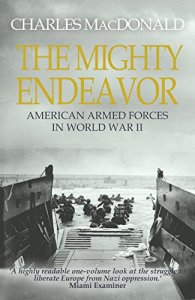
The Mighty Endeavor: American Armed Forces in the European Theater in World War II by Charles B. MacDonald


An Excellent General Military History


"The Mighty Endeavor: American Armed Forces in the European Theater in World War II" by Charles B. MacDonald is an excellent general military history of the US forces in Europe in WWII. Mr. MacDonald served as a Company Commander in the 2nd Infantry Division during World War II. He also was one of the US Army's official historians of World War II.


This lengthy book tells what the forces did and how they did it while not being pedantic. He includes many of the needed details that are necessary for understanding how the US Army was composed and armed. The details are foundational to understand how command decisions were made. This background really helps with an understanding of the political and personal rivalries that were an important part of World War Two's history.


Written With a VIew of the Operational Level


Most of the book is written with a view of the operational level. MacDonald does this skillfully keeping it in the context of what was happening at the corps, army, and army group level, as well as in the realm of the overall strategy.


The author includes many descriptions of small battles, down to the company level. They serve to make readers understand, just what was happening on the ground once higher-level decisions were made.


The book's scope is the American effort in the European Theater in World War II. Beginning in North Africa and ending on the Elbe River, Charles MacDonald describes the development and growth of the American soldiers, sailors, and airmen as they became essential players in the destruction of Nazi Germany. Included are the famous battles and campaigns like the landing in North Africa, Kasserine Pass, Salerno and Anzio, D-Day, the liberation of Paris, the Battle of the Bulge, the crossing of the Rhine, and the race across Germany. The subject matter of the book is very comprehensive. I like that he included the conflicts between American and other Allied leaders over strategy, the important Battle of the Atlantic, the air war, and the major land campaigns.


He does a great job starting with the delicate balance involved in the build-up to war, and the decision to concentrate on victory in Europe first. The famous personalities are described, including, Marshall, Eisenhower, Patton, Mark W. Clark, Hitler, Mussolini, as well as other British and German military leaders which is informative and enlightening.


Stories of the Individual Soldiers


He does not neglect the stories of individual soldiers. They are included throughout the narrative.
The prose is solid and the text readable, having just the right amount of detail. The book is balanced, thought-provoking, very comprehensive, and provides context and perspective of these historic events.


If you only read one book on World War Two, this is the book you should read.

Monday, December 31, 2018

Sunday, December 30, 2018

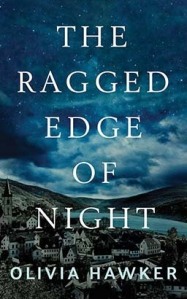
The Ragged Edge of Night by Olivia Hawker


The Ragged Edge of Night by Olivia Hawker is a passionate, elegantly written (maybe the most beautiful prose I have ever read), historical novel about amazing hope, redemption, and one man’s quest for enlightenment during the darkest times of World War II.


The setting is Germany. The time is 1942. The protagonist is Franciscan friar Anton Starzmann. The story finds Anton torn from his place in the world when his school is seized by the Nazis. He relocates to a small German hamlet.


The purpose of the move is a marriage of convenience. Anton needs a place to live. He weds Elisabeth Herter, a widow. She desires a marriage in name only to a man who can help support her and her three children. Anton seeks the union as a way to amend failing to shield his young students from the madness of the Nazis.


Neither Anton nor Elisabeth foresees their lives to be shaken once again by the inescapable rumble of war.


As Anton struggles to adjust to the roles of husband and father, he hears of the Red Orchestra. It is an underground network of militants plotting to assassinate Hitler.


While Elisabeth has reservations, Anton joins this army of shadows. As the SS discovers his schemes, Anton begins a final act of resistance that may cost him his life. He realizes his defiance to Hitler, the SS, and Nazis could cost him the new family he has come to love more than he ever thought imaginable.


The Ragged Edge of Night is the best book I read in 2018 and in years. Olivia Hawker has crafted a masterpiece for the ages.

Airborne: A Combat History of American Airborne Forces by LTG (Retired) E. M. Flanagan Jr.

Airborne Airborne: A Combat History of American Airborne Forces by LTG (Retired) E. M. Flanagan Jr. Allow me to state my prejudices...